Buoys that put themselves where they belong.
Buoy-Bot is a set of autonomous, self-positioning robotic buoys. They drive themselves into position on open water and hold station there — no anchors, no measuring, no second boat.
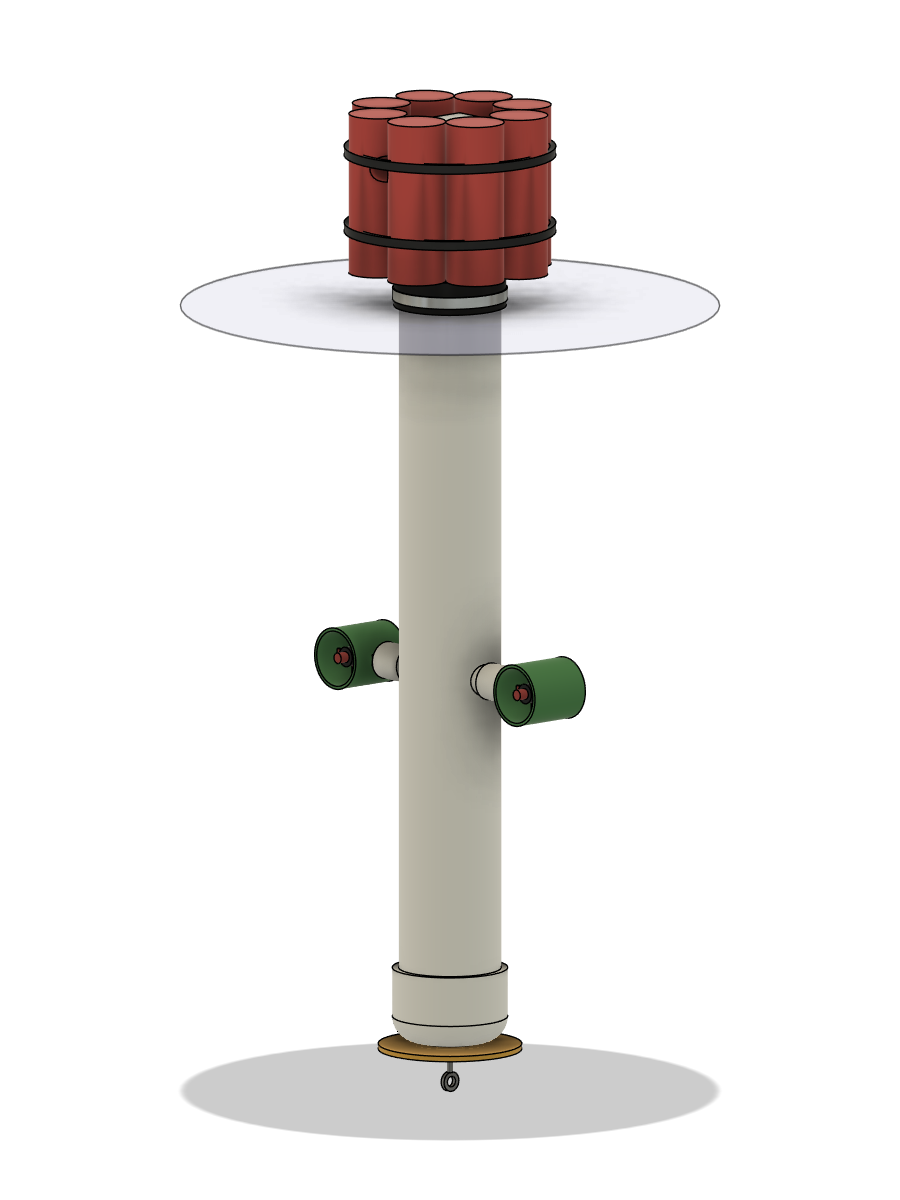
about 1.05 m tall
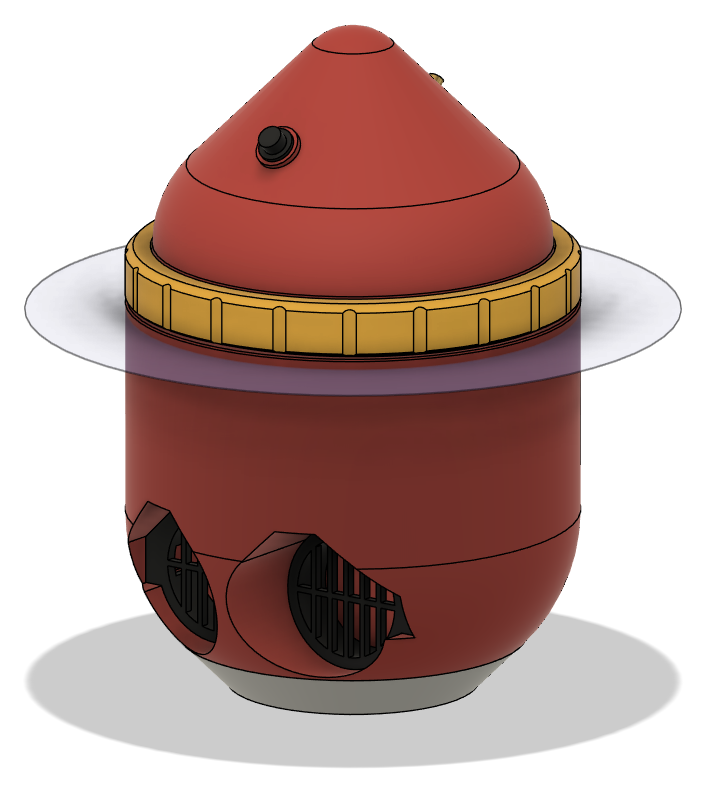
236 mm across, 3D-printed
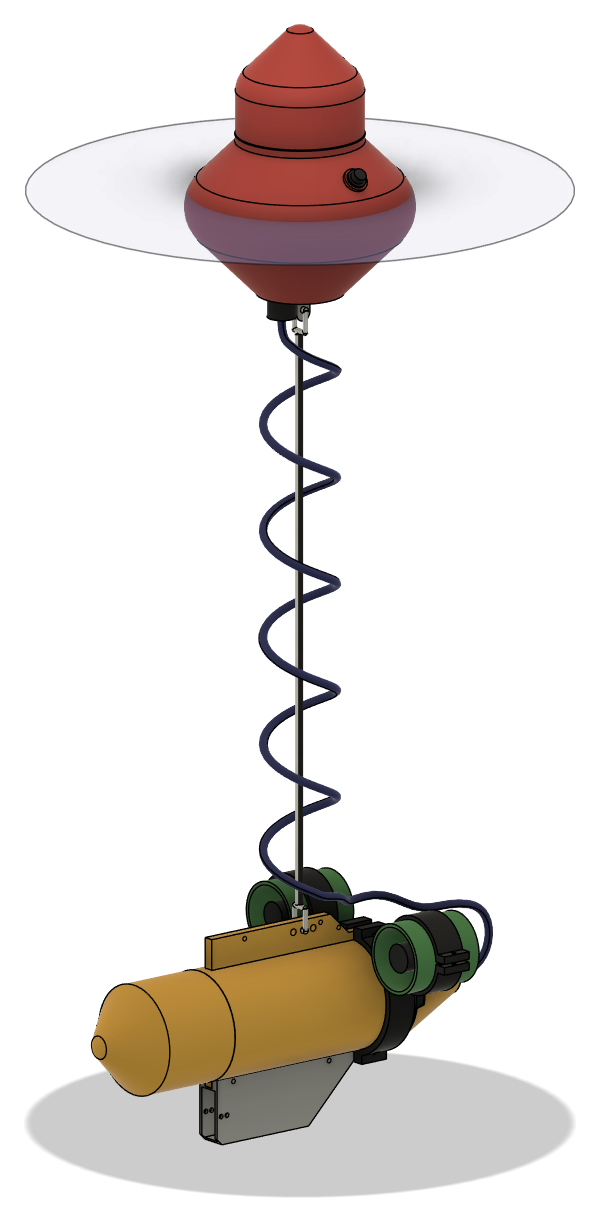
a float on a line, the rest 0.8 m down
How it works
It knows where it is
Each buoy carries high-precision satellite positioning and a digital compass, so it can compare where it should be against where it actually is.
It corrects, continuously
Twin thrusters hold heading and position against wind and current, trimming the buoy back onto its mark rather than drifting off it.
It works as a fleet
The buoys form their own wireless network and coordinate with each other, so a whole layout is placed and held as one group from a single app.
Three hull designs
The electronics, the firmware and the app are the same in all three. What differs is the hull that carries them: one is built from plumbing parts, the other two are printed — a ball, and a small float on a line over a streamlined body.
Reference design
The spar
A slim float of 4″ PVC pipe, ballasted at the bottom, with the thrusters at half draft so thrust causes no heel. Built from off-the-shelf parts with a drill, a saw and a soldering iron. It sits nearly still in boat wakes and gives the compass and antennas the most room.
Printed alternative
The Egg
A 236 mm ball printed in PLA on a 250 mm desktop printer. Both thrusters ride inside shrouded tunnels with nothing sticking out, a lead dish keeps it upright, and the top comes off with a screw-on ring. Designed and checked printable; the first one is still to be printed and floated.
Safest to hit
The Torpedo
Everything heavy — battery, thrusters, electronics, lead — rides in a streamlined printed body 0.8 m down. At the surface there is only a 0.97 kg float with the antenna and radio, on a soft link, like a course ball on its anchor line. Designed and checked printable; not yet built.
Side by side
| Spar | Egg | Torpedo | |
|---|---|---|---|
| Hull | 4″ PVC pipe, about 1.05 m tall | Printed ball, 236 mm across and 351 mm tall | Printed float, 220 mm across, on a cord over a printed torpedo 108 mm across and 427 mm long |
| How it is built | Drill, saw and epoxy; plumbing and hardware-store parts | About 52 hours of printing and 1.9 kg of PLA, plus seals and small hardware | About 48 hours of printing, 1.5 kg of PETG and 0.2 kg of PLA, plus seals, hose and small hardware |
| All-up mass | 9.0 kg | 6.0 kg | 6.3 kg, of which only the 0.97 kg float is at the surface |
| Draft and water depth | 832 mm draft; needs at least 1.5 m of water | 200 mm draft; works in about half a metre | Torpedo 0.8 m down; needs about 1.4 m of water |
| Above the water | A soft foam marker, its top about 22 cm up | The ball itself: 236 mm wide and 151 mm up, inside the size window for a waterski turn buoy | The float: 214 mm wide and 164 mm up, also inside the turn-buoy window |
| Thrusters | Ducted pods on strut stubs, 416 mm down | Inside the hull, in tunnels behind grilles | Ducted pods on the torpedo's tail, 0.8 m down |
| In a boat wake | Barely moves | Rides each wake, so the antenna moves a few centimetres | The float rides each wake and the torpedo moves with the water, but the soft cord never snatches and the antenna stays up |
| Battery and endurance | Two 6 Ah packs, about 4.7 h | One 6 Ah pack, about 2.3 h | One 6 Ah pack, about 2.3 h |
| Getting inside | Unclamp the rubber hatch cap, lift the sled out by its cord | Unscrew a ring by hand, lift the dome off | Unscrew the torpedo's nose in two turns; the float's cap unscrews separately |
| Status | The documented reference design | A test article: verified printable, not yet built | A test article: verified printable, not yet built |
Roughly: the spar is the best instrument, the Egg the simplest fit for the course, and the Torpedo the kindest to a skier. The spar sits still while wakes go by and keeps its compass and antennas far from the motors and high off the water. The Egg is the size of a regulation turn buoy, has nothing to catch a ski and works in shallow water — but it is a hard 6 kg shell. The Torpedo leaves only a light float at the surface and puts the weight and the thrusters deep, at the cost of deeper water, a line under the float and two bodies to build. A course could mix them: torpedoes at the turns, which skiers hit, and Eggs at the boat guides, which boats clip.
What it's for
The first application is a waterski slalom course. Instead of setting and anchoring each buoy by hand, the fleet is told the layout and the buoys take themselves there, then stay put for as long as they're needed.
The same idea generalises to anything that needs marks placed accurately on water and kept there — courses, boundaries and temporary markers that would otherwise be surveyed in and anchored every time.